

Academic Publications
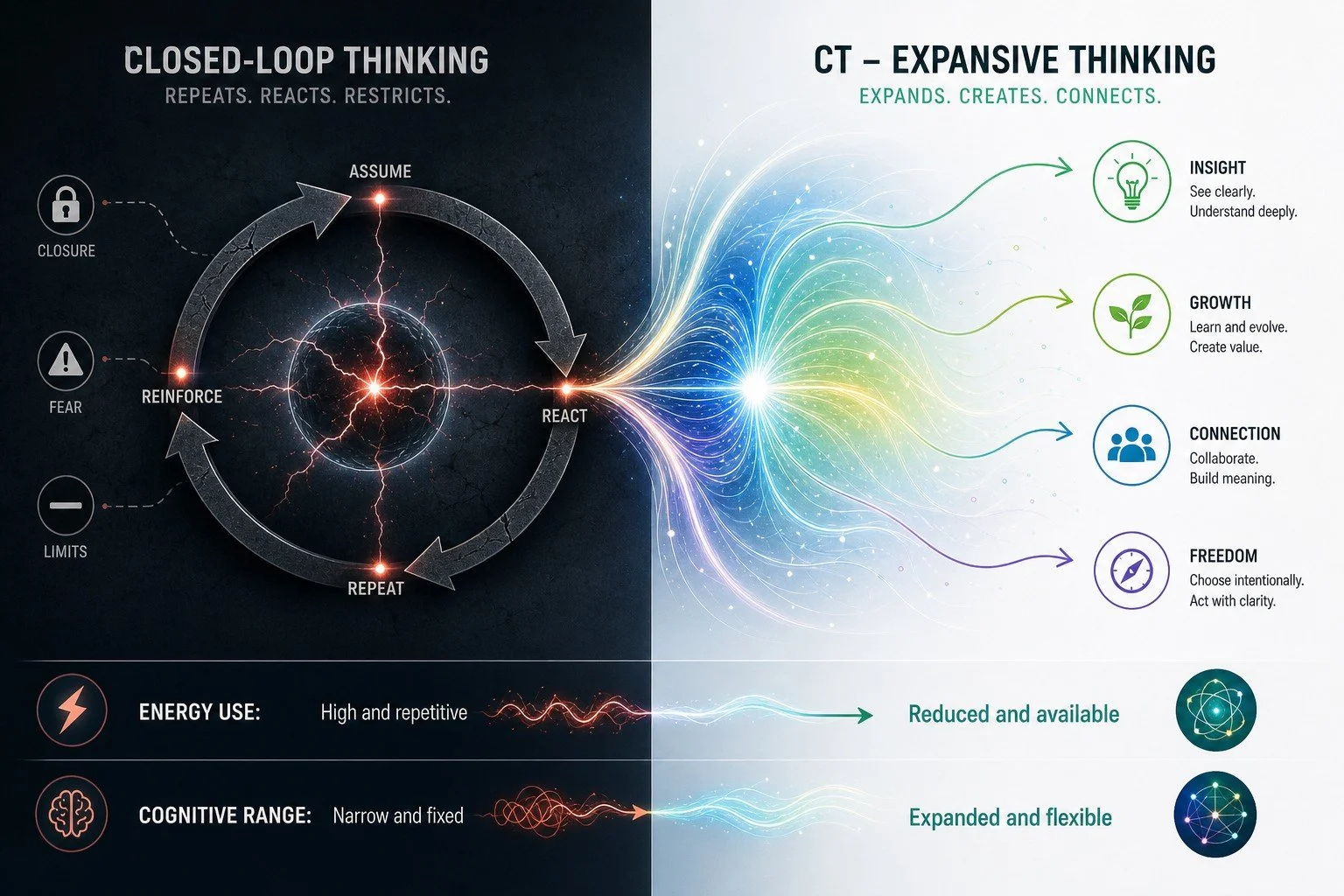
The Cognitive Transcendence® (CT) framework has contributed to scholarly discussions surrounding human consciousness, identity development, cognition, emotional processing, relational systems, perception, adaptation, and psychological functioning. Publications associated with CT examine how patterns become maintained within individuals and systems, how perception influences interpretation and behavior, and how awareness creates the possibility for psychological reorganization, flexibility, change, or release.
The research emphasizes both theoretical depth and practical application, connecting interdisciplinary scholarship with clinical work, education, organizational systems, leadership development, social systems, and everyday human experience. Current and upcoming publications continue to examine topics such as the self, suffering, resistance, identity stabilization, perception, relational dynamics, emotional activation, learning processes, assumed competency, consciousness, and mental freedom within the CT framework.
Below are the publications, presentations, research initiatives, and interdisciplinary projects that have already been completed, along with articles and studies currently in development. These initiatives represent the ongoing academic and applied growth of the CT framework.
Those interested in supporting academic, scholarly, and research-related initiatives, alongside the continued development and global accessibility of the Cognitive Transcendence Foundation®, are invited to inquire regarding sponsorship, research funding, collaborative partnerships, translation initiatives, and philanthropic contributions.
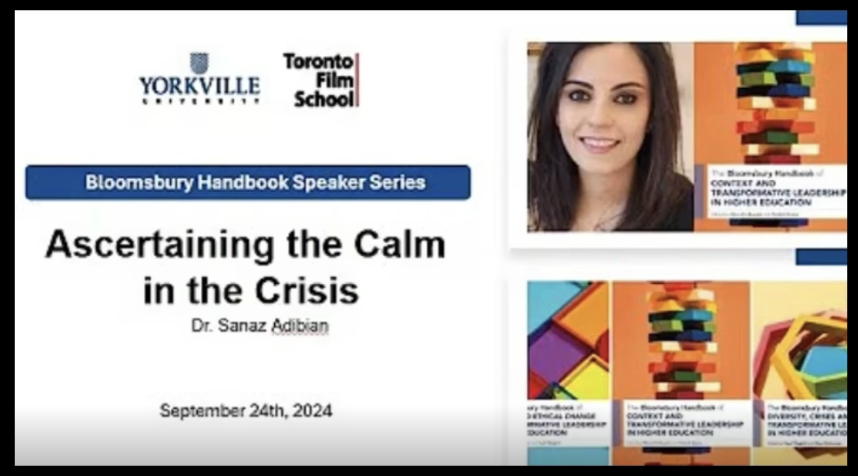
Ascertaining Calm in a Crisis
This chapter presents a linguistic and multidisciplinary examination of crisis, uncertainty, and psychological regulation. The work explores how individuals and systems seek certainty during periods of instability. It introduces the concept of Creation Rhythm, described as development through disruption, reorganization, and renewed order—creating allowance for expansion. The chapter further examines how educational and leadership systems can strengthen multidimensional approaches to crisis understanding and response.
Reference:
Adibian, S. (2024). Ascertaining calm in a crisis. In M. Drinkwater & P. Deane (Eds.), The Bloomsbury handbook of context and transformative leadership in higher education. Bloomsbury Academic.
https://tinyurl.com/Ascertaining-Calm-in-a-Crisis
https://www.researchgate.net/publication/384934949_Ascertaining_Calm_in_a_Crisis
From Stressful Doing to a Joyful Being
This chapter examines occupational stress, identity formation, and patterns of over-identification with productivity and performance. The work explores how chronic cognitive and emotional activation may contribute to psychological exhaustion and disconnection from reflective awareness. The chapter introduces concepts related to self-examination, internal regulation, and mental freedom within organizational and professional settings.
Reference:
Adibian, S. (2023). From stressful doing to a joyful being. In Handbook of research on dissecting and dismantling occupational stress in modern organizations. IGI Global.
Cognitive Transcendence®
This publication introduces the foundational structure of the Cognitive Transcendence® framework and examines the relationship between cognition, language, identity, emotional conditioning, perception, and human development. The chapter integrates perspectives from psychology, linguistics, philosophy, neuroscience, and interdisciplinary scientific inquiry to examine how patterns of thought and self-perception influence psychological experience and behavioral organization.
Reference:
Adibian, S. (2024). Cognitive transcendence. In Encyclopedia of Information Science and Technology (6th ed.). IGI Global.

Upcoming Journal Articles & Research Studies
An article is currently under journal review consideration. The paper examines relational feedback loops within couples dynamics through the Cognitive Transcendence® framework, with particular focus on communication patterns, emotional conditioning, identity structures, and reciprocal behavioral reinforcement within intimate relationships.
A three-year longitudinal study is in progress examining the efficacy of models associated with Cognitive Transcendence®. The study explores areas related to self-reflection, counselor development, cognitive processing, and applied integration over time.
Two additional articles connected to this research program are currently in development and focus on specific dimensions of the framework and its educational and clinical applications.